
Health insurance can feel like its own language. Between premiums, deductibles, copays, and out-of-pocket maximums, it’s easy to get confused about what you’re actually paying for. Understanding these terms can help you make smarter decisions about your healthcare and avoid unexpected expenses.
Here’s a breakdown of the most important terms to know.
Premium: What You Pay for Coverage
Your premium is the amount you pay to keep your health insurance active. If you have insurance through your employer, a portion is typically deducted from your paycheck, while your employer may cover the rest.
You pay your premium whether you use your insurance or not.
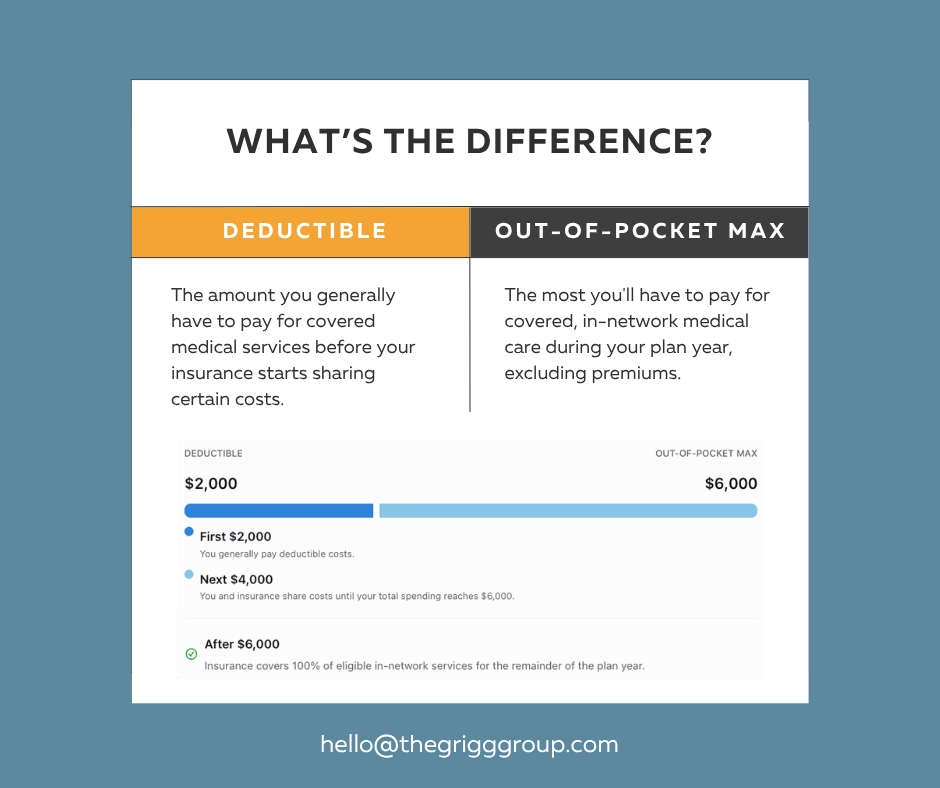
Deductible: What You Pay Before Insurance Shares Certain Costs
Your deductible is the amount you pay for covered healthcare services subject to the deductible before your insurance starts sharing those costs.
For example, if your deductible is $2,000, you generally pay the first $2,000 of services subject to that deductible. Some services, including certain preventive care, may be covered before you meet it.
Copay: A Fixed Cost for Care
A copay is a set amount you pay for certain healthcare services.
For example, you might pay $25 for a primary care appointment or $50 for a specialist visit. Your insurance covers the remaining allowed costs according to your plan.
Coinsurance: Your Percentage of the Bill
Coinsurance is the percentage of covered medical expenses you’re responsible for, typically after meeting your deductible.
If your plan has 20% coinsurance and a covered service costs $1,000 at the negotiated rate, you would pay $200 and your insurance would pay $800, assuming your deductible has already been met.
Out-of-Pocket Maximum: Your Spending Limit
Your out-of-pocket maximum is the most you’ll pay for covered, in-network healthcare services during your plan year.
This includes qualifying deductibles, copays, and coinsurance, but not your monthly premiums.
Once you reach that maximum, your insurance pays 100% of the allowed costs for covered in-network services for the remainder of your plan year.
In-Network vs. Out-of-Network
In-network providers have negotiated rates with your insurance company, generally making them more affordable.
Out-of-network providers may cost significantly more or may not be covered by your plan at all, except in certain circumstances.
Always verify that your healthcare providers participate in your specific insurance network.
Make Your Health Insurance Work for You
Choosing health insurance isn’t just about finding the lowest premium. It’s about understanding your potential costs, knowing what’s covered, and selecting a plan that fits your needs.
At The Grigg Group, we believe understanding your benefits is just as important as having them. We’re here to help employers and their employees navigate health insurance with greater confidence.
Coverage and cost-sharing details vary by plan. Always review your specific plan documents.